
Postpartum
Recovery, feeding, bleeding, and the first months after birth.
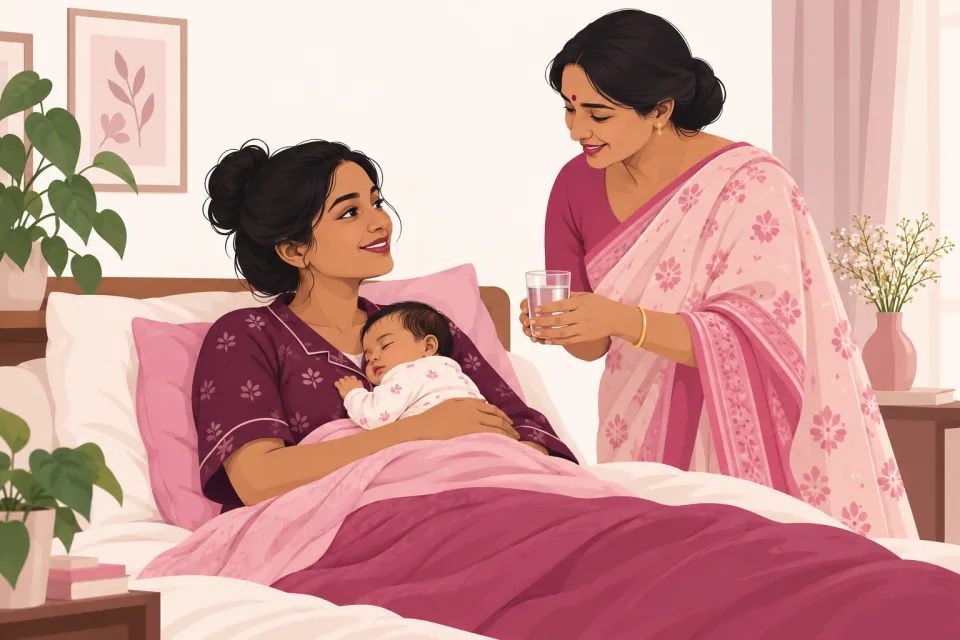
About postpartum
Recovery, feeding, bleeding, and the first months after birth.
0 guides ·157 answers
Following a topic is private. It changes what you see in My Space and nothing else — no one is told which topics you follow.
Answers — page 3 of 7
- After delivery we have to travel eight hours by bus to my mother's village. Is there any risk of blood clots on the long journey? Editorially reviewed The weeks after birth carry a higher chance of blood clots in the legs, and long periods of sitting still add to that. For most women the journey can still go ahead with some simple steps. Get up and walk at breaks, move your feet and ankles often while seated, drink enough… Reviewed 10 Nov 2026· English
- Doctor told me to continue blood thinner injections at home after my caesarean. Why are these needed if I have no clots? Editorially reviewed After a caesarean, especially if there are other risk factors, the chance of a blood clot in the legs or lungs is higher for some weeks. Blood thinner injections are given to lower this risk before a clot forms. They are a preventive step, not a sign that you already have a… Reviewed 10 Nov 2026· English
- C-section ke baad belt pehenna zaroori hai kya? Saas bolti hain bina belt ke pet kabhi andar nahi jayega. Editorially reviewed An abdominal binder or belt is not essential after a caesarean. Some women find it comfortable in the first weeks because it supports the wound when they move, cough or feed. Others find it hot or tight. Either choice is fine if your wound is healing well. A belt does not by… Reviewed 10 Nov 2026· English
- I had postnatal depression after my first baby and now I am pregnant again. I am scared it will happen again. Can anything be done to prevent it? Editorially reviewed Having had postnatal depression before does increase the chance of it returning, but it does not mean it will. Planning ahead can lower the risk and help you get support quickly if symptoms appear. Tell your antenatal team about your history. They can arrange closer follow-up of… Reviewed 10 Nov 2026· English
- Lochia kitne din tak chalta hai? Paanch hafte ho gaye, abhi bhi halka bhoora discharge aa raha hai. Normal hai kya? Editorially reviewed The bleeding and discharge after birth, called lochia, usually lasts somewhere between four and six weeks, and for some women a little longer. It starts bright red, becomes pinkish or brown, and then turns yellowish or creamy white before it stops. Light brown discharge at five… Reviewed 10 Nov 2026· English
- Doctor said my C-section wound has opened a little at one end and needs dressing at the PHC every day. How long will it take to close? Editorially reviewed When part of a caesarean wound opens, it is often left to heal from the bottom up with regular dressings. This is called healing by secondary intention. A small gap commonly takes a few weeks to close; larger or deeper gaps can take longer. Keeping the dressing appointments… Reviewed 10 Nov 2026· English
- Aaru vaarathukku apram breast soft aa irukku, munnadi maadhiri full aa feel aagala. Paal vatthi pochaa? Editorially reviewed Breasts often feel softer after the first few weeks. In the early days they can feel full and heavy as milk supply settles, but by around six weeks the body usually adjusts to the baby's needs and stops overfilling. Softer breasts alone do not mean milk is drying up. Better… Reviewed 10 Nov 2026· English
- I am so tired from night feeds that I nodded off while feeding the baby on the sofa last night. It scared me. How do I stay safe when I am this exhausted? Editorially reviewed Falling asleep while feeding is very common when you are this tired, and you are right to think about safety. Sofas and armchairs are among the riskiest places to fall asleep with a baby, because the baby can slip into a gap or get trapped against cushions. If you think you… Reviewed 10 Nov 2026· English
- Since delivery I have pain at the front of my pelvic bone and in my hips, and walking or turning in bed hurts. Is this related to pregnancy? Editorially reviewed Pain at the front of the pelvis, in the hips or lower back that is worse when walking, climbing stairs or turning in bed can be pelvic girdle pain. It is common in pregnancy and for some women continues after birth, because the joints of the pelvis loosen and take time to… Reviewed 10 Nov 2026· English
- loose skin and stomach overhang after delivery will it go Editorially reviewed After pregnancy the skin and muscles of the tummy have stretched, and some looseness is very common. Over months, as the womb returns to size and weight gradually reduces, the tummy often becomes firmer. Some loose skin can remain, especially after more than one pregnancy or a… Reviewed 10 Nov 2026· English
- Baby oru pakkam mattum dhaan kudikudhu, inoru breast chinnadhaa paal kammiya aagiduchu. Ippo enna pannradhu? Editorially reviewed It is common for one breast to produce more milk than the other, and some babies prefer one side because the flow is faster or the position is easier. Over time, the less-used breast makes less milk and can become smaller. To build supply on the less-used side, offer it first… Reviewed 10 Nov 2026· English
- Delivery apram mudi kotti romba. Amma daily ennai thechu kulicha nikkum nu solranga. Adhu unmaiya? Editorially reviewed Hair fall a few months after delivery is very common. During pregnancy, hair stays in the growing phase longer, and after birth many hairs move into the shedding phase at once. This usually peaks around three to four months after birth and settles by the baby's first birthday… Reviewed 10 Nov 2026· English
- postpartum hair loss biotin supplement or cut hair short helps? Editorially reviewed Postpartum shedding happens because many hairs move into the resting and shedding phase together after birth. It usually settles on its own by around the baby's first birthday, and new hair grows back. Cutting hair short does not change how much falls from the scalp, though… Reviewed 10 Nov 2026· English
- Baby ku pal mulaika aarambichudhu, feed pannumbodhu kadikudhu, nipple la pun aagiduchu. Feeding niruthanuma? Editorially reviewed Many mothers continue breastfeeding after teeth appear. While actively feeding, the baby's tongue usually covers the lower teeth, so biting tends to happen at the start or end of a feed, or when the baby is distracted or teething. If the baby bites, calmly slide a clean finger… Reviewed 10 Nov 2026· English
- My daughter-in-law delivered at home in our village. The placenta came out but she is still bleeding steadily for more than an hour. What do we do? Editorially reviewed Please treat this as an emergency now. Steady bleeding that continues for an hour after the placenta has come out can be a postpartum haemorrhage, which needs hospital treatment quickly. Call 108 or 112 for an ambulance, or take her straight to the nearest hospital with a labour… Reviewed 10 Nov 2026· English
- Doctor diagnosed mastitis and started antibiotics two days back, but fever is still there and breast is still red. Is the medicine not working? Editorially reviewed Most women with mastitis start feeling better within two or three days of starting treatment. Fever and redness that are no better by then should be reviewed, because the infection may need a different treatment, or a collection of pus, called an abscess, may be forming. Keep… Reviewed 10 Nov 2026· English
- Tanke ki jagah par bahut khujli ho rahi hai, delivery ko do hafte hue. Kya infection hai? Editorially reviewed Itching around stitches is common as wounds heal, and usually means the skin is repairing. It can also come from sweat, pads, or dissolving stitch material. Usually it settles over a week or two. Keep the area clean and dry, change pads often, wear loose cotton underwear, and… Reviewed 10 Nov 2026· English
- My discharge summary says PPH and that I needed blood transfusion during delivery. Now I am home. What should I watch for? Editorially reviewed PPH means postpartum haemorrhage, which is heavier bleeding than usual around the time of birth. The hospital treated it, and the transfusion replaced some of the blood you lost. At home the main things to watch are whether bleeding increases again and how your body copes with… Reviewed 10 Nov 2026· English
- I had pre-eclampsia in my first pregnancy and delivered early. Now we want a second baby. Will it happen again and can anything reduce the risk? Editorially reviewed Having had pre-eclampsia raises the chance of it happening again, but many women have a healthy second pregnancy. The risk is higher if it was severe or started early. Planning ahead helps. Before trying, have your BP, kidney function and sugar checked, reach a healthy weight if… Reviewed 10 Nov 2026· English
- Two weeks after delivery my wife is barely sleeping, talking very fast, and now says the baby is not ours and someone is watching her. What should I do? Editorially reviewed Please treat this as an emergency. Sudden confusion, very fast speech, not sleeping, and fixed false beliefs such as the baby not being hers or being watched can be signs of postpartum psychosis. It is uncommon but serious, and it needs urgent medical care today, usually in… Reviewed 10 Nov 2026· English
- Since my baby came I keep washing my hands and sterilising everything again and again because I am terrified of germs. It is taking hours of my day. Is this normal? Editorially reviewed Being careful about hygiene with a newborn is normal. But when washing or sterilising is driven by intense fear, takes hours, and you feel you cannot stop even when you know things are clean, it may be postnatal obsessive-compulsive symptoms. This is more common after birth than… Reviewed 10 Nov 2026· English
- Baby ka doodh achanak chhudwa diya, ab breast mein gaanth aur dard hai aur halka bukhar bhi. Kya karun? Editorially reviewed Stopping breastfeeding suddenly can leave the breasts overfull. Milk can build up behind a blocked duct, causing a tender lump, and this can lead to inflammation or infection called mastitis, which may cause fever. Expressing just enough milk by hand to feel comfortable, cold… Reviewed 10 Nov 2026· English
- scared to pass motion after episiotomy stitches constipation what to do Editorially reviewed Many women fear the first bowel movement after stitches, but the stitches are very unlikely to open from passing a soft stool. The bigger problem is holding it in, because that makes stools harder and more painful. Drink plenty of water, eat fruit, vegetables, dal and whole… Reviewed 10 Nov 2026· English
- Since I went back to work my milk supply has dropped. I can only express a little at office. What can help? Editorially reviewed A drop in supply after returning to work is common because milk is made on demand: less frequent removal means the body makes less. Expressing regularly at work, roughly as often as the baby would feed, helps signal your body to keep making milk. Feeding the baby directly before… Reviewed 10 Nov 2026· English
Guides and articles
No guides here yet
This topic was read and no guide is filed under it. A longer guide is published once it has been reviewed, and its page says who reviewed it.
Related topics
Would a session help?
Ask for a doctor to host a session on this topic. Only the number of requests is ever shown — never who asked.
Life-stage collections
Curated sets of answers for early adulthood, pregnancy, postpartum, midlife and later life.