
Postpartum
Recovery, feeding, bleeding, and the first months after birth.
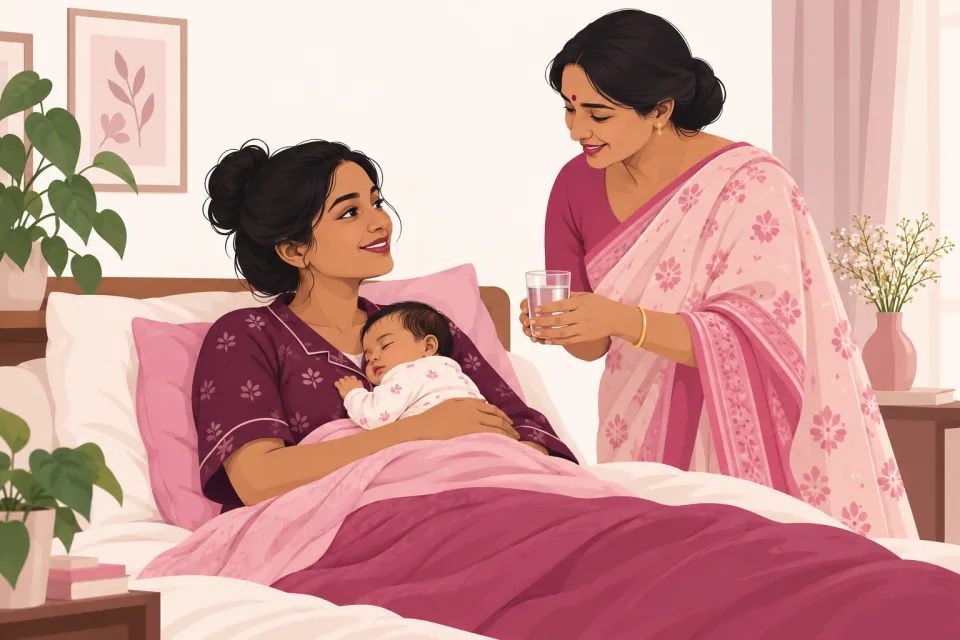
About postpartum
Recovery, feeding, bleeding, and the first months after birth.
0 guides ·157 answers
Following a topic is private. It changes what you see in My Space and nothing else — no one is told which topics you follow.
Answers — page 5 of 7
- My breast has a red patch and is sore, but I do not have fever yet. I have a newborn and going to hospital is difficult. Can I wait and see? Editorially reviewed A sore red area without fever is often an early blocked duct or the start of inflammation. Many such cases improve within a day or so if you keep feeding as usual from both sides, rest, wear loose clothing and use a cool compress after feeds for comfort. Avoid deep or vigorous… Reviewed 10 Nov 2026· English
- Doosri delivery ko ek hafta hua. Bade bachche ko dekh ke bahut guilt hota hai ki usko time nahi de pa rahi, aur baat baat pe rona aata hai. Kya ye bhi baby blues hai? Editorially reviewed Tearfulness, mood swings and feeling guilty in the first week or two after a birth are common, and they can happen after a second baby just as after a first. Many mothers feel torn between the newborn and an older child, and that guilt often adds to the emotional ups and downs… Reviewed 10 Nov 2026· English
- No psychiatrist in our town. Where can I get help for postnatal depression without spending much? Editorially reviewed Help is available even without a psychiatrist nearby. Tele-MANAS, the government's free mental health helpline on 14416, offers counselling in many Indian languages and can link you to further care. Your PHC medical officer, ANM or ASHA can also screen for depression and refer… Reviewed 10 Nov 2026· English
- Main khet aur mazdoori ka kaam karti hun. Delivery ke baad bhari kaam kab se shuru kar sakti hun? Editorially reviewed After a normal delivery, light activity can start soon, but heavy lifting, carrying loads and long hours of bending are best avoided for at least the first six weeks, and longer after a caesarean or a difficult birth. The womb, pelvic floor and tummy muscles need time to… Reviewed 10 Nov 2026· English
- Six months after birth I still look pregnant. Is it just fat or could my stomach muscles have separated? Editorially reviewed It could be either, or both. Separation of the tummy muscles, called diastasis recti, is common after pregnancy, and the gap often narrows on its own over the first months. When it does not, the tummy can still bulge, especially when you strain or sit up. Weight gained in… Reviewed 5 Oct 2026· English
- Doodh kam aa raha hai lagta hai, ghar mein sab formula shuru karne bol rahe hain. Pehle kya try karun? Editorially reviewed Many mothers feel their milk is low, but often the supply is fine and the baby is feeding normally. The first step is to check whether the baby is gaining weight and having enough wet nappies. If so, the supply is likely enough. If supply is truly low, the most effective ways to… Reviewed 5 Oct 2026· English
- Both my feet and ankles are swollen one week after delivery. Is it normal or should I worry? Editorially reviewed Swelling in both feet and ankles is common in the first week or two after delivery, as the body clears extra fluid from pregnancy. It often looks worse after sitting or standing a lot and improves with walking, raising your feet and time. However, swelling can also be linked to… Reviewed 5 Oct 2026· English
- Since my forceps delivery I sometimes cannot hold wind or even a little stool. Is this something doctors can help with? Editorially reviewed Yes. Difficulty controlling wind or stool after a forceps delivery can happen if the muscles around the back passage or the nerves were stretched or torn. It is more common than people realise, and doctors can help. It is worth raising early, because treatment and exercises work… Reviewed 5 Oct 2026· English
- tailbone pain after normal delivery cannot sit Editorially reviewed Pain in the tailbone, called coccydynia, can happen after a vaginal delivery when the baby's head presses on or bends the tailbone. It is often worse when sitting, especially on hard surfaces, and when getting up from sitting. Many women improve gradually over weeks to months… Reviewed 5 Oct 2026· English
- On day four my breasts became rock hard and swollen and the baby cannot latch. What helps with engorgement? Editorially reviewed Engorgement is common when milk comes in, usually a few days after birth. The breasts can become hard, swollen and painful, and the nipple can flatten, making latching difficult. Softening the area around the nipple by hand expressing a little milk before feeding can help the… Reviewed 5 Oct 2026· English
- Sex has been painful since my delivery even though my stitches have healed. Is this common? Editorially reviewed Yes, painful sex after childbirth is common, especially after a tear or an episiotomy. Even once stitches have healed, scar tissue can be tender, the pelvic floor muscles can be tight, and vaginal dryness is common while breastfeeding because of lower oestrogen levels. For many… Reviewed 5 Oct 2026· English
- Delivery ke baad pehla period bahut heavy aaya, bade clots ke saath. Kya ye normal hai? Editorially reviewed The first period after delivery can be heavier, longer or more painful than before, and some clots can be normal. But very heavy bleeding, large clots, or bleeding that makes you dizzy or breathless is not something to ignore. A doctor can check for causes such as hormone… Reviewed 5 Oct 2026· English
- My sister-in-law delivered ten days ago at our town hospital. Today she is soaking a thick pad within an hour and says she feels dizzy. What should we do? Editorially reviewed This needs emergency care now. Soaking a pad in an hour or less, together with feeling dizzy, can mean she is losing a large amount of blood, which can become dangerous quickly. Call 112 or take her to the nearest hospital with a labour ward or emergency department without… Reviewed 5 Oct 2026· English
- what to eat after delivery indian diet ghee laddoo necessary Editorially reviewed A balanced diet after delivery helps recovery and breastfeeding. Traditional foods like dal, rice or roti, vegetables, curd, milk, nuts and seeds can be part of this. Ghee and laddoos are often given for energy, but large amounts of ghee or sweets are not necessary and can add a… Reviewed 5 Oct 2026· English
- Delivered three weeks back, bleeding had become brown but since yesterday it is bright red again with some clots. Is this normal or should I go back to hospital? Editorially reviewed Bleeding after birth, called lochia, usually changes from red to pink or brown and then to a pale discharge over several weeks. A short return of red bleeding can happen, for example after being more active, during feeding, or when a scab where the placenta was attached comes… Reviewed 5 Oct 2026· English
- It has been three months. I don't feel connected to my baby, I can't sleep even when she sleeps, and I feel like a failure as a mother all the time. Is this postnatal depression? Editorially reviewed Feeling disconnected from your baby, being unable to sleep even when you have the chance, and constantly feeling like a failure for three months are common signs of postnatal depression. It affects many mothers, is not your fault, and is treatable. Talking to a doctor is an… Reviewed 5 Oct 2026· English
- I keep getting sudden images of dropping my baby down the stairs and it terrifies me. Does this mean I will actually do it? Editorially reviewed Sudden, unwanted, frightening thoughts or images about the baby being hurt are very common in new mothers. They are called intrusive thoughts. The fact that they terrify you and you do not want them is a sign that they go against what you want, and having them does not mean you… Reviewed 5 Oct 2026· English
- Everyone at home says my milk is not enough because baby cries after feeds. How do I actually know if baby is getting enough? Editorially reviewed Crying after feeds is not, by itself, proof of low milk. Babies cry for many reasons, including wind, tiredness, wanting comfort or a growth spurt. The more reliable signs that a baby is getting enough are steady weight gain at check-ups, plenty of wet nappies each day, regular… Reviewed 5 Oct 2026· English
- Husband wants to start relations again at six weeks but I am not at all ready. Is there any medical rule on when? Editorially reviewed There is no fixed day when sex must resume. Doctors usually suggest waiting until bleeding has stopped and any tear or wound has healed, often around the six-week check, but the more important point is that you feel physically and emotionally ready. Many women need longer, and… Reviewed 5 Oct 2026· English
- I had my baby at forty-one and the exhaustion is far worse than I expected. Could it be anaemia or thyroid and not just lack of sleep? Editorially reviewed Exhaustion with a new baby is common at any age, but it is reasonable to check for medical causes. Anaemia is common after delivery, especially if you lost blood at birth, and thyroid problems can appear in the months after childbirth. Low mood and postnatal depression can also… Reviewed 5 Oct 2026· English
- After every feed one nipple looks squashed like a new lipstick and turns white, then throbs. Why is this happening? Editorially reviewed A nipple that comes out flattened or wedge-shaped after a feed usually means the baby is compressing it, which happens with a shallow latch. The white colour followed by throbbing or burning can come from blood vessels in the nipple tightening and then relaxing, sometimes called… Reviewed 5 Oct 2026· English
- C-section done four weeks back. When can I lift my older kid and climb stairs at home? Editorially reviewed Recovery from a caesarean takes time, and most women build up activity gradually over about six weeks or more. Climbing stairs slowly is usually allowed early, once you can walk comfortably. Lifting anything heavier than your baby is usually discouraged in the early weeks… Reviewed 5 Oct 2026· English
- En wife ku breast la oru katti, sivappa irukku, kaichal varudhu. Hospital pogalama illa veetla paathukalama? Editorially reviewed A red, painful lump in the breast with fever may be mastitis. This is inflammation of the breast, sometimes with infection. Fever is a reason to see a doctor the same day rather than manage only at home. The NHS advises that she carry on breastfeeding as usual, including from… Reviewed 5 Oct 2026· English
- Five days after delivery I have burning urine and fever. They had put a catheter in hospital. Is it urine infection? Editorially reviewed Burning urine with fever after delivery can be a urine infection, and having a catheter in hospital makes this more likely. It should be checked the same day, because fever means the infection may have spread beyond the bladder, and other infections after delivery need to be… Reviewed 5 Oct 2026· English
Guides and articles
No guides here yet
This topic was read and no guide is filed under it. A longer guide is published once it has been reviewed, and its page says who reviewed it.
Related topics
Would a session help?
Ask for a doctor to host a session on this topic. Only the number of requests is ever shown — never who asked.
Life-stage collections
Curated sets of answers for early adulthood, pregnancy, postpartum, midlife and later life.