
Postpartum
Recovery, feeding, bleeding, and the first months after birth.
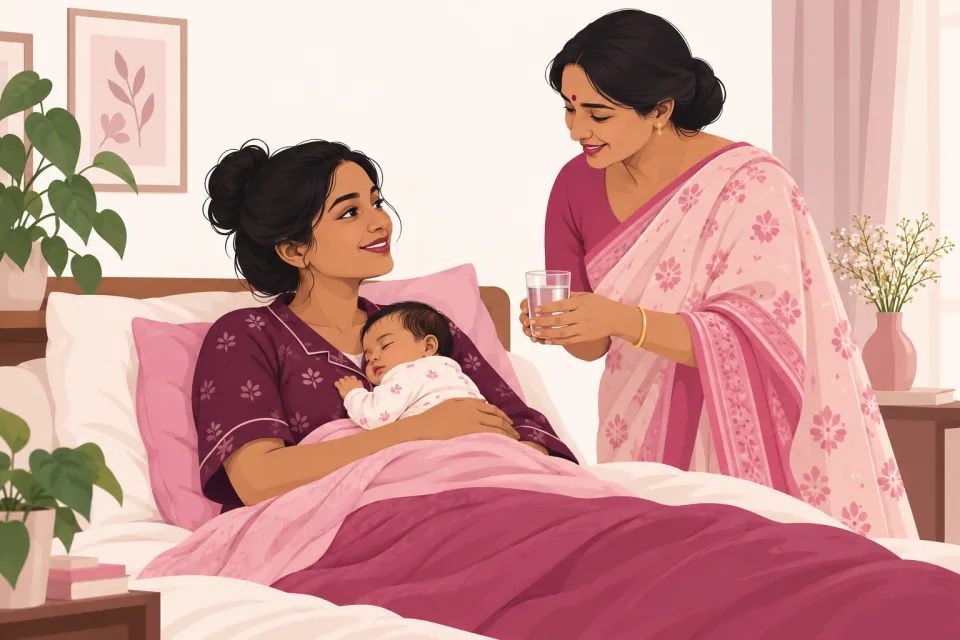
About postpartum
Recovery, feeding, bleeding, and the first months after birth.
0 guides ·157 answers
Following a topic is private. It changes what you see in My Space and nothing else — no one is told which topics you follow.
Answers — page 2 of 7
- My husband says I am lazy because I rest during the day while the baby sleeps. He does not understand how tired I am. How do I explain recovery to him? Editorially reviewed Recovery after birth takes weeks to months, and that is a medical fact, not laziness. Your body is healing from pregnancy and birth, possibly from stitches or surgery, while you feed a baby around the clock. Resting when the baby sleeps is what health professionals advise. It… Reviewed 10 Nov 2026· English
- After my C-section with spinal anaesthesia I get a bad headache when I sit up that goes away when I lie down. Doctor mentioned spinal headache. What is that? Editorially reviewed A headache that is much worse when sitting or standing and eases when lying flat, after spinal or epidural anaesthesia, can be a post-dural puncture headache. It happens when a small amount of the fluid around the spinal cord leaks from the puncture site. Many settle within days… Reviewed 10 Nov 2026· English
- At my postnatal check they asked me some questions about mood and said my score was high. What does that score mean? Editorially reviewed Many clinics use a short questionnaire, such as the Edinburgh Postnatal Depression Scale, to screen for postnatal depression. A high score does not diagnose depression by itself. It means you may be experiencing significant low mood or anxiety, and that a fuller conversation is… Reviewed 10 Nov 2026· English
- C-section aagi irukku, adutha baby ku evlo gap vidanum? Veetla seekiram adutha kozhandhai venum nu solranga. Editorially reviewed The World Health Organization recommends waiting at least 24 months (two years) after a birth before becoming pregnant again. After a caesarean, discuss the timing with your obstetrician, because the plan for the next birth depends on your scar and how the last labour went. This… Reviewed 10 Nov 2026· English
- Six weeks after normal delivery the stitch area feels like a hard lump and pulls when I sit. Is it healing properly only? Editorially reviewed A firm or slightly lumpy feeling where stitches were placed is common for some weeks. As tissue heals it forms scar tissue, which can feel thicker and tighter than the surrounding skin, and the pulling often eases over the next few months. What is less usual is a lump that is… Reviewed 10 Nov 2026· English
- Kozhandhaiya thookumbodhu thideernu kaththi la kuthiduveno nu oru bayangaramaana ennam varudhu. Doctor kitta sonna kozhandhaiya eduthuduvangalo nu bayama irukku. Editorially reviewed Sudden, unwanted frightening thoughts or images of harm coming to the baby are surprisingly common after birth. They are called intrusive thoughts. The fact that they horrify you and that you want to protect your baby is a strong sign that they are thoughts you do not want to… Reviewed 10 Nov 2026· English
- My sister had her baby one week ago and cries every evening, says she cannot do anything right. How can I support her? Editorially reviewed Crying and feeling unsure in the first weeks is common and often part of the baby blues. Evenings can feel the hardest when everyone is tired. Your support can make a real difference. Listen without judgement, reassure her that many mothers feel this way, and help practically… Reviewed 10 Nov 2026· English
- Since my delivery with a big tear, I sometimes feel wind or a bad smell coming from the vagina, not the back passage. I am too embarrassed to tell anyone. What could it be? Editorially reviewed Passing wind or noticing a stool-like smell or discharge from the vagina after a difficult birth or a large tear can be a sign of a fistula, an abnormal opening between the bowel and the vagina. It is uncommon, but it is important to get checked, because it is treatable… Reviewed 10 Nov 2026· English
- The hospital put a Copper T right after my delivery. How do I know it is still in place, and when should it be checked? Editorially reviewed A Copper T placed immediately after delivery, called a post-placental IUCD, is a common and effective option in India. It is usually checked at the six-week postnatal visit to make sure it is in the right position. Sometimes the threads are not visible at first and are tucked… Reviewed 10 Nov 2026· English
- Scan after delivery showed some retained products and doctor said a small procedure may be needed. What does retained placenta mean? Editorially reviewed Retained products means that small pieces of placenta or membranes stayed inside the womb after birth. They can stop the womb from contracting fully and can lead to ongoing or heavy bleeding, or to infection. That is why your doctor is suggesting treatment. Depending on the… Reviewed 10 Nov 2026· English
- Every time I cough or sneeze my C-section wound hurts badly. How can I protect it? Editorially reviewed Coughing, sneezing and laughing put pressure on the tummy and can hurt a healing caesarean wound. It is common, and the wound is usually strong enough to cope, but supporting it reduces pain. Hold a small pillow or folded towel firmly against the wound when you cough, sneeze or… Reviewed 10 Nov 2026· English
- Baby keeps slipping off my flat nipple and I end up sore and bleeding. Can a nipple shield help? Editorially reviewed Flat or inverted nipples can make latching harder at first, but many mothers breastfeed successfully. Babies latch onto the breast, not just the nipple, so a deep latch with a wide mouth helps. Shaping the breast with your hand, using different positions, and drawing out the… Reviewed 10 Nov 2026· English
- My daughter-in-law has a round bald patch on her scalp a few months after delivery, not general hair fall. Is this also postpartum hair loss? Editorially reviewed Ordinary postpartum hair loss is usually spread across the scalp, with more hair in the comb and thinning at the temples. A smooth, round bald patch is a different pattern. It is often due to alopecia areata, a condition where the immune system affects hair follicles, and less… Reviewed 10 Nov 2026· English
- My sister delivered at the CHC one week ago. Now she has fever, her lower tummy is tender to touch and she feels very weak. Local clinic gave a tablet. Should we go back? Editorially reviewed Fever with a tender lower tummy a week after birth can be a sign of an infection of the womb, called endometritis. This needs proper assessment and treatment, often with antibiotics, and sometimes in hospital. A single tablet for fever may bring the temperature down but not… Reviewed 10 Nov 2026· English
- A year after my baby I want to start running again, but I leak urine every time I jog. Should I stop running? Editorially reviewed Leaking during running is common after childbirth because running puts repeated pressure on the pelvic floor. It is a sign that the pelvic floor needs more strengthening, not necessarily that you must stop running altogether. A pelvic floor physiotherapist can check your muscles… Reviewed 10 Nov 2026· English
- Mere pati baby ki care mein help karna chahte hain par ghar wale bolte hain mard ko ye kaam shobha nahi deta. Kaise samjhaun? Editorially reviewed Fathers taking part in baby care is good for the baby, the mother and the father. It helps the mother rest and recover, supports breastfeeding, reduces the chance of low mood, and builds the father's bond with the baby. Health services increasingly encourage fathers'… Reviewed 10 Nov 2026· English
- Family says depression is only for weak people and I just need to pray and be strong. I feel low for weeks. How do I explain this to them? Editorially reviewed Postnatal depression is a common health condition, not a weakness or lack of faith. It is linked to hormone changes, sleep loss, stress and life changes, and it can affect any mother. It is treatable, and getting help is a strong step for you and your baby. It may help to… Reviewed 10 Nov 2026· English
- Delivery ke baad saas fruits, dahi aur thandi cheezein bilkul mana karti hain, bolti hain baby ko sardi lag jayegi. Kya ye sahi hai? Editorially reviewed Fruits and curd are healthy foods after delivery, and they do not give the baby a cold through breast milk. Colds are caused by viruses, not by what a mother eats. Fruits give vitamins, fibre and water, which help healing and prevent constipation, and curd is a good source of… Reviewed 10 Nov 2026· English
- I am a nurse doing rotating night shifts and my maternity leave is ending. How do I keep breastfeeding with night duty? Editorially reviewed Breastfeeding with shift work is possible with planning. Before returning, build a small stock of expressed milk and help the baby get used to cup feeding. During shifts, express regularly to protect supply and avoid painful fullness, and store milk in a fridge or cool box. On… Reviewed 10 Nov 2026· English
- I was discharged on BP medicine after delivery. When can I stop it, and is it okay while I am breastfeeding? Editorially reviewed Blood pressure can stay high for some weeks after delivery, especially after pre-eclampsia or pregnancy high BP. Many women need BP medicine for a while, and the medicine is usually reduced and stopped as BP comes down, under medical guidance. Do not stop BP medicine on your… Reviewed 10 Nov 2026· English
- On day three after delivery I had mild fever and my breasts were very full and heavy. My mother says it is milk fever. Is that true? Editorially reviewed A slight rise in temperature can happen when milk comes in and the breasts become very full, which some people call milk fever. It is usually mild and settles within a day as feeding is established. However, fever after delivery should never be assumed to be harmless. Infection… Reviewed 10 Nov 2026· English
- Two weeks after delivery I wake up drenched in sweat every night but I have no fever on the thermometer. Is this normal? Editorially reviewed Night sweats are common in the first weeks after birth. The body is getting rid of the extra fluid built up during pregnancy, and hormone levels are dropping quickly. Many women find they sweat heavily at night and pass more urine for some weeks. If you have no fever, feel… Reviewed 10 Nov 2026· English
- My episiotomy scar is still sore when I touch it or wear tight clothes, four months after delivery. Is that normal? Editorially reviewed Most episiotomy scars feel comfortable within a few weeks to a couple of months. Some women continue to have tenderness for longer, often from scar tissue, a tight repair, or sensitive nerve endings in the area. Ongoing pain at four months is worth having examined, because… Reviewed 10 Nov 2026· English
- Main delivery ke liye mayke aayi hun. Pati phone par bhi baat nahi karte, sasural wale baby dekhne bhi nahi aaye. Bahut akela lagta hai. Editorially reviewed Feeling lonely and hurt when your husband and in-laws seem distant after the birth is understandable. Family support matters a lot in recovery, and its absence can weigh heavily. It may help to share how you feel with someone you trust, such as your mother, a sibling, a friend… Reviewed 10 Nov 2026· English
Guides and articles
No guides here yet
This topic was read and no guide is filed under it. A longer guide is published once it has been reviewed, and its page says who reviewed it.
Related topics
Would a session help?
Ask for a doctor to host a session on this topic. Only the number of requests is ever shown — never who asked.
Life-stage collections
Curated sets of answers for early adulthood, pregnancy, postpartum, midlife and later life.